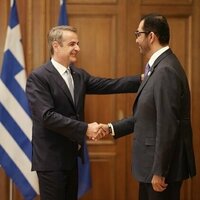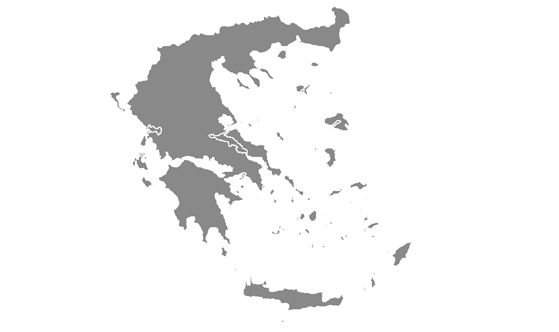


(CN) - Greek Prime Minister Kyriakos Mitsotakis, the conservative Harvard-educated scion of a Greek political dynasty, on Monday sought to staunch the damage caused by a wide-ranging scandal over embezzlement charges involving millions of dollars in European Union agricultural funds, including by top members of his government.
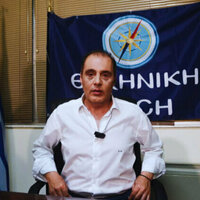
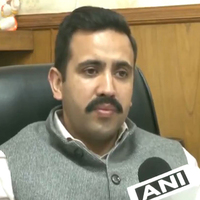
The scandal exploded on Friday after the European Public Prosecutor's Office handed its findings over to the Hellenic Parliament, leading to the resignations of five senior officials, including Makis Voridis, a high-profile hard-right figure in Mitsotakis' cabinet serving as migration minister.
The episode is the latest stain on Mitsotakis' image as a good-government, pro-business and technocratic reformer undoing damage caused by previous far-left governments that took power following Greece's catastrophic debt crisis. He leads the center-right New Democracy party, the traditional conservative force.
On Friday, EPPO prosecutors delivered a nearly 3,000-page report to the Hellenic Parliament describing evidence against government officials accused of making fraudulent claims and receiving EU subsidies through the Greek Payment and Control Agency for Guidance and Guarantee Community Aids, an entity better known as OPEKEPE. The report accused state officials of receiving large subsidies for land they neither owned nor worked.
The report has not been made public, but details have emerged about how OPEKEPE acted like a "criminal organization," according to Greek news reports. The case file reportedly names 15 members of parliament, including 13 from New Democracy and two from left-wing opposition parties, alongside regional officials and former OPEKEPE executives.
Greek media published various details, including portions of wiretapped telephone conversations, which appeared to show senior political figures attempting to manipulate the subsidy process and obstruct the EPPO investigation.
"The tone of the discussions - often flippant or cynical - has reinforced public outrage and concerns over entrenched cronyism," Teneo, a political risk firm, said in a briefing note.
In a social media post on Sunday and later at a cabinet meeting on Monday, Mitsotakis admitted his government had "failed" to clean up the "clientelistic behavior" at OPEKEPE.
He ordered a reshuffle of his cabinet and said those who received fraudulent payments would be made to return the funds.
He ordered OPEKEPE to be shut down. Opposition parties, meanwhile, demanded a full parliamentary inquiry.
"I know that you trusted us to change the wrongs and not to perpetuate them," Mitsotakis said. "Significant efforts were made to clean up [OPEKEPE]. But let's be honest. We failed."
The EPPO's probe first became public on May 20 when raids were carried out in Athens, including at the offices of OPEKEPE and a location in Crete.
According to prosecutors and news reports, between 2019 and 2024, OPEKEPE doled out millions of dollars in subsidies to numerous people falsely claiming to be young or new farmers. The funds came from the EU's Common Agricultural Policy, the EU's core rural development program centered on subsidies and price support mechanisms.
Prosecutors said those under investigation falsely claimed they owned or leased pasture land eligible for subsidies. They accused board members overseeing OPEKEPE of organizing the embezzlement "in a systematic manner."
"In most cases, the pastures declared were in fact public lands, previously allocated only for use by livestock breeders who lacked private agricultural land," EPPO said in a news release. "These pastures were often located far away from the actual place of residence of the individuals claiming to own or lease them."
The EPPO did not reply to a query from Courthouse News seeking additional details, such as the number of fraudulent claims.
On Friday, Voridis and four other senior officials resigned. They were: Deputy Foreign Minister Tasos Chatzivasileioum, Deputy Rural Development Minister Dionysis Stamenitis, Deputy Digital Governance Minister Christos Boukoros and Giorgos Stratakos, secretary general of the Rural Development Ministry. Also implicated was former Agriculture Minister Lefteris Avgenakis.
The European Commission is working with the EPPO on the matter and imposed a 415-million-euro ($488 million) fine on Greece. In an email, the commission said it could not discuss an ongoing criminal probe by the EPPO.
Under Greek law, state officials and members of parliament are granted immunity from prosecution, and only the national parliament can lift immunity, even for former state officials. For that reason, the EPPO was forced to hand over its findings to the parliament in the hope that it would lift immunity. It called Greece's immunity law contrary to EU law. Greece's protections for politicians and state workers can be traced back to measures to shield political figures from persecution by Greece's former ruling military junta, whose grip on power ended in 1974.
The parliament, which is controlled by Mitsotakis' party, was expected to debate lifting immunity.
Mitsotakis came into office in 2019 on promises to fix Greece's deep economic woes with a business-friendly and technocratic approach and by streamlining Greece's bureaucracy through technology.
But Mitsotakis' sunny promises about ushering in a new era of transparency and good governance have been badly damaged by scandals, including one dubbed the "Greek Watergate" because the government used spyware to monitor political opponents and journalists.
"The political implications are already visible," Teneo wrote. "Public dissatisfaction with the government has risen sharply, with recent polls showing a decline in ND's support and growing disillusionment with Prime Minister Mitsotakis personally."
Teneo said the public increasingly sees the Mitsotakis administration as "using institutional mechanisms to shield allies."
Courthouse News reporter Cain Burdeau is based in the European Union.
Source: Courthouse News Service