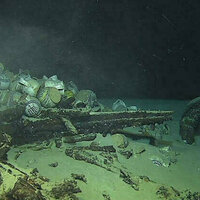


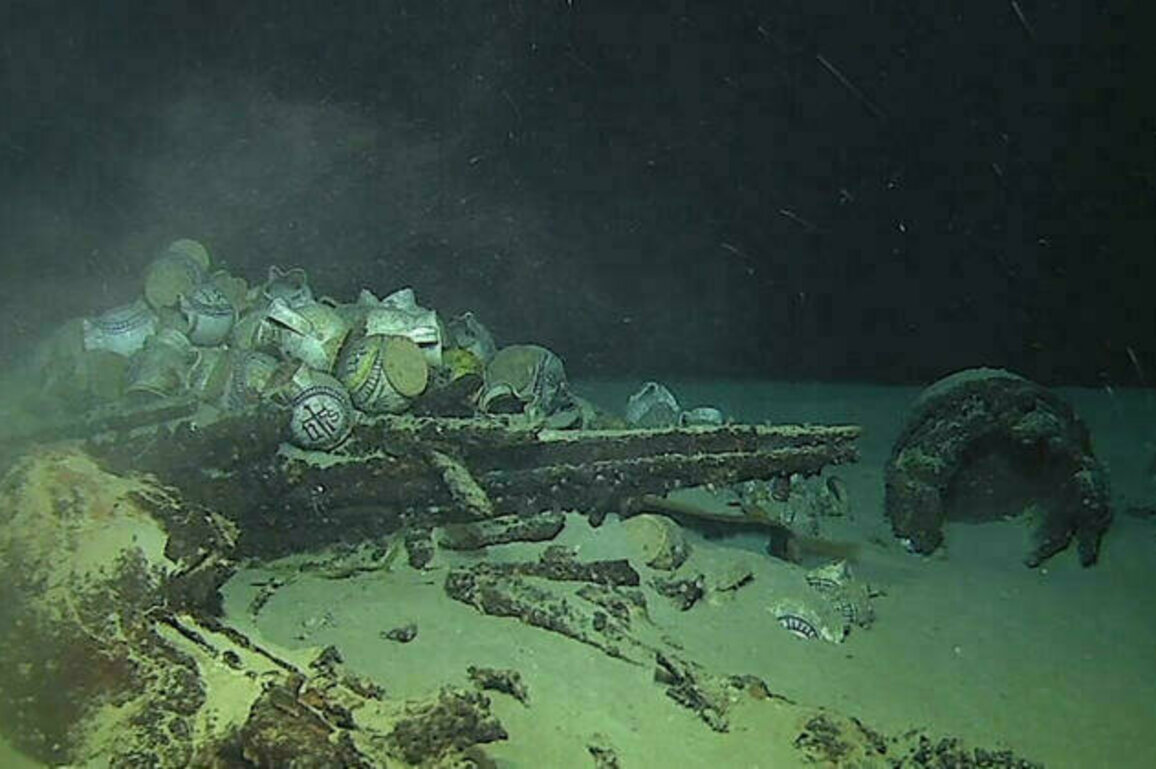
Archaeologists have discovered what they say are the remains of a 16th-century merchant ship more than 2.5 kilometres underwater off the coast of Saint-Tropez in southeastern France. They said the ship, which was discovered by an underwater drone, was sailing from northern Italy loaded with ceramics and metal bars before it sunk.
Archaeologists have discovered what they say are the remains of a 16th-century merchant ship more than 2.5 kilometres underwater off southernFrance, the deepest such find in its section of the Mediterranean or any other French waters.
Archaeologists believe the ship was sailing from northernItalyloaded with ceramics and metal bars before it sunk.
Despite a little modern household waste dotting its sunken cargo at 2,567 metres (more than 1.5 miles) below sea level, they were excited about the potential of an archaeological site largely preserved intact.
Read more🌟The Bright Side: Franciss popemobile turned into clinic for Gazan children
"It's the deepestshipwreckever found in French territorial waters," Arnaud Schaumasse, the head of thecultureministry's underwater archaeology department, said late Wednesday.
An underwater drone stumbled upon the sunken ship by chance in early March in waters near Saint-Tropez in southeastern France, deputy maritime prefect Thierry de la Burgade said.
"The sonar detected something quite big, so we went back with the device's camera, then against with an underwater robot to snap high-quality images," he said.
The drone was patrolling the seabed as part of a government project to explore and monitor France's deep-sea resources, frommineralsto deep-sea internet cables.
Archaeologist Marine Sadania said experts discovered 200 jugs with pinched spouts among the wreckage at the site they have dubbed "Camarat 4".
Some of these jugs were marked with the monogram "IHS", the first three letters of the Greek name of Jesus, or covered with plant-inspired or geometric patterns.
Those details seemed to indicate the jugs hailed from the Liguria region in what is now northernItaly, she said.
Read more🌟The Bright Side: Kenya NGO on a mission to save turtles from nets, plastics and rising tides
'As if time froze'
Experts also identified piles of around 100 yellow plates, two cauldrons, an anchor and six cannons.
Modern waste, such as a soda can or an empty yoghurt pot, were spotted too.
But despite this, "the site -- thanks to its depth which prevented any recovery or looting -- has remained intact, as if time froze, which is exceptional," Sadania said.
Over the coming two years, she and colleagues plan to draw up a 3D digital version of the ship, as well as extract samples from the site to better study them before returning them to the public domain.
According to thedefenceministry in charge of exploring France's deep seas, researchers can remove an item from a shipwreck by guiding a submarine robot with pincers or arms, via a long cable linking the device to a boat on the surface.
The deepest French authorities had found a sunken vessel until now was 2.3 kilometres under sea level off the southern city of Toulon in 2019.
The wreckage belonged to La Minerve, a French submarine that plunged to its demise in 1968 with 52 navy crew on board, four minutes only after the start of a routine assignment.
(FRANCE 24 with AFP)
Originally published on France24