

The MaritimeGCH model allows shipowners to explore various potential fleet decarbonisation pathways.
The global shipping industry, the lifeblood of world trade, stands at a critical juncture in the fight against climate change.
Imagine a vast network of global commerce, with ships carrying over 80 per cent of the world's goods. This essential service contributes to approximately 2-3 per cent of global greenhouse gas emissions annually. The primary culprit: carbon dioxide (CO2) released from the combustion of heavy marine fuels.
This deep reliance on carbon-intensive energy sources forms a significant barrier for the sector when aligning with global climate targets. The industry must confront ambitious climate goals while navigating a complex web of regulations and economic realities.
A new UN SDSN analysis explores the current state of decarbonisation efforts, specifically examining the impact of the International Maritime Organization (IMO) and European Union (EU) regulations on the Greek fleet, a dominant force in global shipping.
The analysis spotlights the urgent requirement for robust policy support and international cooperation to steer towards a sustainable maritime future.
Early steps to address this challenge included the IMO's introduction of the Energy Efficiency Design Index (EEDI) in 2008. This marked the first binding rule aimed at reducing ships' carbon intensity. Yet, the persistent affordability of fossil fuels meant that more ambitious policies were slow to materialise.
Regulatory initiatives
A significant shift occurred in July 2023 when the IMO agreed to a revised strategy, setting a target of net-zero emissions by 2050. This includes interim emission reduction targets of 20-30 per cent by 2030 and 70-80 per cent by 2040, all compared with 2008 levels.
While this overarching strategy provides a framework, the diverse and often fragmented nature of global shipping regulations, trade routes and the multitude of stakeholders have complicated consistent implementation.
Recently, there has been a welcome acceleration in efforts to establish clearer rules and drive decarbonisation efforts. The IMO's Carbon Intensity Indicator (CII), a mechanism that actively encourages the adoption of faster vessels and cleaner engine technologies in force since January 2023, offers a rating system for ships based on their CO2 emissions per unit of transport work.
In January 2024, the European Union extended its Emissions Trading System (ETS) to encompass maritime transport. This establishes a cap on ship emissions, requiring operators to purchase or trade emission allowances.
As a key component of the EU's "Fit for 55" package, FuelEU Maritime mandates a gradual reduction in the fuel-related greenhouse gas intensity of ships. This starts with a 2 per cent reduction by 2025, progressively increasing to an ambitious 80 per cent by 2050. The clear aim is to propel shipowners towards embracing renewable and low-carbon fuels.
Challenges to decarbonisation
Despite these important regulatory steps, the shipping sector continues to navigate a complex web of obstacles in its journey towards sustainability. These challenges span technological limitations, increasing global demand, the intricacies of stricter regulations and the inherent difficulties of international coordination.
These interconnected factors make the path towards a sustainable maritime industry an intricate one. To grasp these dynamics, researchers are increasingly employing integrated models to analyse the interplay of costs, emissions and operational needs under various policy and fuel scenarios.
The MaritimeGCH model
Current research endeavours are focused on addressing existing knowledge gaps by simulating the impact of the newly expanded EU ETS alongside IMO regulations, using the Greek fleet as a case study.
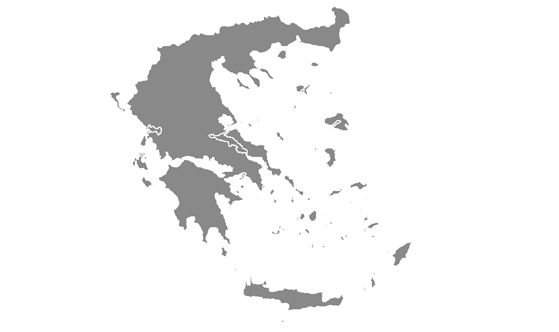
Greece commands a substantial share of global deadweight tonnage, approximately 18 per cent (around 427 million DWT). This means Greece's success in decarbonisation - or indeed, any setbacks - carries significant global implications.
The revised Greek National Energy and Climate Plan (NECP) currently lacks a well-defined strategy for the shipping sector and a national fleet decarbonisation strategy remains absent, despite EU requirements.
To help bridge this gap, UN SDSN Global Climate Hub developed the MaritimeGCH model, an open-access Investment Decision Support System designed to explore various potential fleet decarbonisation pathways. This tool empowers shipowners and policymakers to evaluate how different investment decisions, fuel mixes and efficiency measures might perform under real-world constraints.
These constraints include rising demand for shipping services, fluctuating fuel costs, emission caps and penalty thresholds, as outlined in recent EU regulations. Built using the versatile Python programming language, MaritimeGCH integrates economic, environmental and technical data alongside the CII, the ETS cap trajectory and FuelEU targets.
A dual approach
The UN SDSN Global Climate Hub has applied the MaritimeGCH model to every Greek-flagged vessel from 2025 to 2050 under a "middle of the road" scenario for demand and decarbonisation. This scenario combines the adoption of on-board emission reduction technologies with a phased transition from oil to LNG and LPG as short-term solutions, followed by methanol, ammonia and hydrogen in the long term.
The preliminary results of this dual approach, involving cleaner fuels and emission reduction technologies, indicate a downward trend in emissions. However, this reduction is consistently challenged by the increasing demand for shipping services. This suggests that even with combined interventions on both the fuel and ship technology fronts, achieving full decarbonisation by 2050 will be difficult.
These efforts are projected to be costly due to increased prices for new, greener vessels and alternative fuels, as well as potential compliance penalties for exceeding EU ETS emission thresholds.
Charting a course for green shipping
To pave the way for a feasible transition for shipowners towards greener fuels and to mitigate potentially punitive ETS costs, both European and Greek authorities can introduce well-designed incentives, aiming to reduce fuel consumption (and hence, emissions) and also using cleaner fuels.
Examples include measures that promote circularity within the industry, actively support the timely adoption of alternative fuels through accelerated development of port infrastructure such as ammonia bunkering, implement zero-carbon fuel tax credits or even provide subsidies for retrofitting existing vessels to improve efficiency.
Equally vital is the development of a comprehensive national shipping climate strategy that aligns with the National Energy and Climate Plan (NECP). This would address the current planning gap and ensure that Greece, a leading maritime nation, does not lag behind in this global transition.
The shipping industry's journey to net-zero emissions requires parallel and concerted actions across multiple fronts: private sector investments in innovative technologies and sustainable fuels; public policies that effectively integrate IMO regulations, the EU ETS and national planning frameworks; and international cooperation to establish a reliable global supply chain of low-carbon bunker fuels.
By addressing these challenges and with the continuous support of scientific tools like MaritimeGCH, the shipping industry can set sail for a cost-effective and timely course towards a green maritime future.
Dr Phoebe Koundouri is a Professor at the Athens University of Economics and Business and the Technical University of Denmark. She is President of the World Council of Environmental and Natural Resource Economists Associations, Chair of the SDSN Global Climate Hub, Director of AE4RIA and Director of the Sustainable Development Unit ATHENA Research Center.
Dr Angelos Alamanos is an independent researcher based in Berlin, Germany.
Dr Olympia Nisiforou, is an Assistant Professor at Cyprus University of Technology. She holds a PhD in Environmental Science and Technology. She is a top UNESCO Fellowship awardee.
Mr Christopher Deranian is a Fulbright Fellow at the Athens University of Economics and Business. He holds an M.S. in Energy and Earth Resources from the University of Texas at Austin.
Originally published under Creative Commons by 360info.
The post New model uncovers roadblocks to Greece's green shipping challenge appeared first on 360.